
Silence and Space in Video Game Audio

[…]

Silence is music, too.

You can’t practice art.

In order for it to be true, one must live it.

Existence is not contingent upon thought.

It’s where you choose to put silence that makes sound music.

Sound and silence equals music.

Sometimes when I’m soloing, I don’t play shit.

I just move blocks of silence around.

The notes are an afterthought.

Silence is what makes music sexy.

Silence is cool.

[…]

Nicholas Payton

from On why Jazz isn’t cool anymore

Creating space in sound is crucial. Without space, soundscapes become cluttered and exhausting. Important information gets masked, sound quality suffers, and the experience can become irritating.

When we create space, the ear can identify information more clearly, more details can be heard, and we have greater control over tension and energy.

To create space, we must prioritize and sometimes let go of certain audio elements, even if we are attached to them. We have to accept stepping aside for the element that will tell the story better.

Perfection is achieved, not when there is nothing more to add, but when there is nothing left to take away.
(Antoine de Saint-Exupéry, Wind, Sand and Stars, 1939)

Embracing Space and Silence

Oh, the privilege of genius! When one has just heard a piece by Mozart, the silence that follows is still his.
(Sacha Guitry, Toutes réflexions faites, 1947)

Besides leaving room for other sounds, silence is important because it enhances both the sounds we’ve just heard and those we are about to hear.

When it comes to voice, silence is necessary between words and sentences. Sometimes, creative directors or narrative designers want to fill trailers or game sequences with spoken dialogue, even asking actors to speak faster or editors to shorten the pauses. This ends up sounding overloaded and unnatural. Silence, sound effects, and music are all part of the message we want to convey.

As for sound design: not everything needs to be heard all the time. Game sound is not reality, no matter how realistic we aim to make it. When walking through a city, our brain naturally filters out irrelevant sounds to focus on what matters at any given moment. Our work in game sound is similar: we direct focus to certain elements while pushing others into the background.
For example, when the main character is walking through a summer meadow on a calm day with no music playing, should we hear the details of their footsteps in the grass? Absolutely!
But when we’re racing a car at full speed with loud music blaring, do we want to hear birds singing in the trees? Probably not.

Composers must also exercise humility: sometimes stepping back by creating “musical ambiences” without dominant melodic lines, leaving a lot of room in their compositions, and skillfully adjusting instrumentation so that the full orchestra isn’t playing all the time.
And sometimes, the best solution is to have no music at all — letting voices and sound design carry the story.

Game Audio as Opera

I love to design game audio as a whole. Voices are the opera singers; sound effects and music are the orchestra in the pit.
All three are interconnected, working together to support the story unfolding on stage.
Sometimes, you’ll hear the soft murmur of strings like wind in the trees, then the melody of an oboe adding a pastoral touch — before the full orchestra bursts forth like a musical storm.
There are moments of intense energy, when singers and orchestra join in powerful tuttis; then quieter moments — arias that highlight the voice — and moments where just a few instruments play scattered notes surrounded by space.

How to Create Space in Time and Frequency Domains

Below is the kind of mental imagery I use when working on a game.
Of course, it’s not precise: sounds and music occupy wide frequency ranges. But it’s a useful approximation for communicating ideas.

Before:
We have a wind loop.
We have a music loop that fills a lot of the frequency spectrum, with little room left.
The music, wind, and footsteps often overlap in the same frequency ranges.
The result feels crowded, and some elements might get masked.
We need to make some adjustments.

After:
Instead of a constant wind loop, we have random gusts playing from time to time.
The music has been modified to leave more space and avoid occupying the entire frequency range continuously.
We can also apply a low-pass filter to the music, allowing sound transients to pass through more clearly.
This gives us more detail, more clarity, and a sound design that is less fatiguing over time.

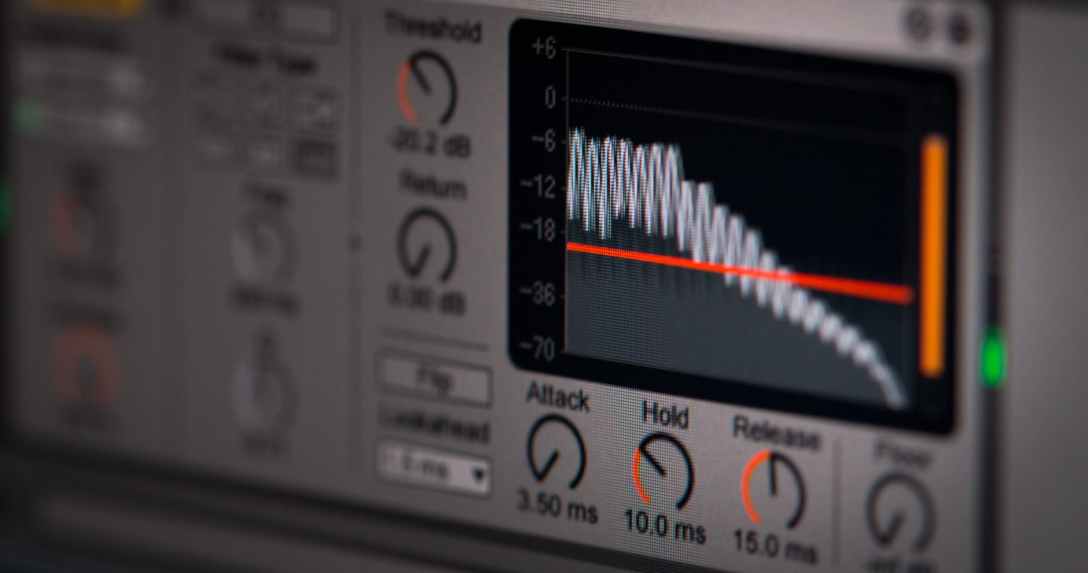
We can also create dynamic EQ systems that temporarily attenuate certain frequency ranges.

Creating Space with dynamic gain changes

Building voice, sound, and music systems while anticipating how they will interact and leave room for each other is important.

But we can also create space by playing with dynamics. Here are some examples:

  • Auto-ducking the music and sound effects when dialogue plays.
  • Dynamically adjusting the gain of music depending on game phases (e.g., number of enemies alerted), or based on the signal level of the SFX bus.
  • Dynamically adjusting the intensity of certain instruments within the music depending on what’s happening in the game.
The Role of Sound in Video Games

“Sound is not just what you hear — it’s what you feel, what you understand, and what makes you stay.”
In this article, I explore how audio in video games serves as more than decoration — it informs, moves, and shapes the player’s experience. From Doom to Disney Dreamlight Valley, here’s how sound design and music support gameplay, narrative, and emotion.

Sound as a Source of Information and to Support Game Mechanics

When we play, it’s not always possible to keep an eye on all the visual feedback, such as those shown in the HUD (Heads-Up Display). A clearly identifiable sound can alert the player to take action at the right moment, without needing to look away from the center of the screen.

Example: Disney Speedstorm is a racing game I had the chance to work on as an audio director.
A very distinctive sound plays when the nitro gauge is full, allowing the player to boost without losing time. No need to take your eyes off the road — the sound alone provides the information.

Developers may also want to convey certain information in a more organic and implicit way.

Example: Doom
Here, aggressive music starts when entering a room full of monsters. Once the enemies are cleared, the music stops, signaling to the player that he can breathe again.

In some cases, sound communicates vital information far more effectively than any visual feedback.

Example: Fortnite
This game is a masterpiece of sound design. Attenuation, spatialization, occlusion, and sound diffraction help players accurately detect the position of enemies — even through walls or on a different floor.

Sound as a Source of Emotion

Sound — especially music and voice — is a powerful vehicle for emotion.

Some works, whether in film or games, rely heavily on sound to create atmosphere and generate emotion.

Think of Star Wars. John Williams’ music, with its operatic qualities, is as important as the main characters.

Speaking of Star Wars, here’s a little exercise to illustrate my point. Click the link and immediately mute the sound:

What you’re seeing is the tutorial level of Lego Star Wars: Castaways, which I had the opportunity to work on.
The first time we played this level during development, there was no sound or music. The gameplay involved walking through a few rooms with a broom and hitting some objects. Nothing too exciting.
Now replay the clip with the sound on. You’ll notice that the music adds a great deal of emotion. It makes us feel like we’re part of an epic and dangerous adventure — even though not much is actually happening.

Here’s another example that stayed with me: Homeworld.
After fifteen increasingly difficult levels, one final battle stands between us and a return to our home planet. When all seems lost, Barber’s Adagio for Strings, sung by a choir, begins. It amplifies all the emotions we feel at this climactic point.

Sound to Support Story and Setting

Sound and music also serve to support the narrative and contextual aspects of a game, aligning with its creative and artistic direction.

Example: Modern Combat 5
As soon as the shutters open and we discover Venice, the music starts, supporting both the action and the setting. The energy, the orchestral and electronic colors accompany the combat, but the string writing unmistakably evokes Vivaldi — the iconic 18th-century Venetian composer.

Example: Super Mario Bros
This game is one of the best examples of music illustrating the environment. Let’s take the underwater cave level. The 3/4 rhythm and soft textures match the aquatic setting, where the character swims among fish.

Example: Lego Legacy: Unboxed, a game I worked on a few years ago.
Each environment has its own musical context. In this video, the music clearly evokes a swampy Bayou setting.

Sound to Enhance the Pleasure of Playing

We shouldn’t ignore the intrinsic beauty of sounds and music. Some sounds are simply satisfying and subtly increase the pleasure of playing.

Example: Disney Dreamlight Valley, another project I worked on.
Several of the sounds are very pleasing, both to me and to players. I particularly enjoy the sound of the pickaxe breaking rocks.

One very important consideration is not to exhaust the player with sound. Some people play for hours. There are several ways to avoid fatigue:

  • Include as much variety in sounds and music as possible (although this isn’t always feasible due to time or budget constraints)
  • Use dynamic and random systems to generate variety with limited assets
  • Create space — in timing and frequency — I’ll publish another article on this soon
  • If musical variety is limited, avoid strong, recognizable melodies and opt for ambient, spacious music
  • Be careful not to overuse high frequencies, which can quickly become tiring
  • Respect platform loudness standards ( -23 LUFS for consoles, -16 LUFS for mobile)

Visuals, Voice, Sound, Music, Silence: Who Tells the Story?

In both cinema and video games, we don’t always need sound, music, and voice simultaneously.
Sometimes, ambient sounds — like wind in the leaves — tell the story best. Sometimes it’s just a monologue. Other times it’s the music. And occasionally, silence is the most powerful way to convey emotion.

Example: Gears of War 3
Here, the music and voices express the sadness of a character’s death while sound effects fade into the background. Watch until the end.

Conclusion: Sound as a Support for the Game

Audio is a fundamental element in video games. It provides crucial information, stirs emotion, builds attachment, supports story and historical context, enhances gameplay — all while avoiding fatigue.

It’s important to understand that our role as sound designers or composers is to highlight the game — not our own sounds or music.

Unlike a music album, which emphasizes melody and density, video game music often leaves space and becomes more of a “musical atmosphere” that allows the game to breathe and lets the sound design shine through.

Example: Disney Dreamlight Valley
Notice how the music creates a spacious, intimate, and calming atmosphere, allowing the player to enjoy the nighttime ambiance.

More intense musical moments can be used to highlight specific gameplay events like cutscenes or key story moments.

The same applies to sound design. We don’t need to hear every real-world detail. We prioritize the most relevant sounds, which often means leaving out anything unnecessary.